Pages

Enjoying Thailand away from the beaches...

Thailand is surely most famous for its stunning white sand beaches that encircle each of the islands that are scattered like emeralds around its coastline. Despite the beauty of the crystal clear water and tropical fishes, there are a wealth of places to see and amazing activities to enjoy if you take the time to step inland and experience the north of Thailand. From elephants to history lessons, you're sure to find something for you in the fabulous area of northern Thailand.

Chiang Mai

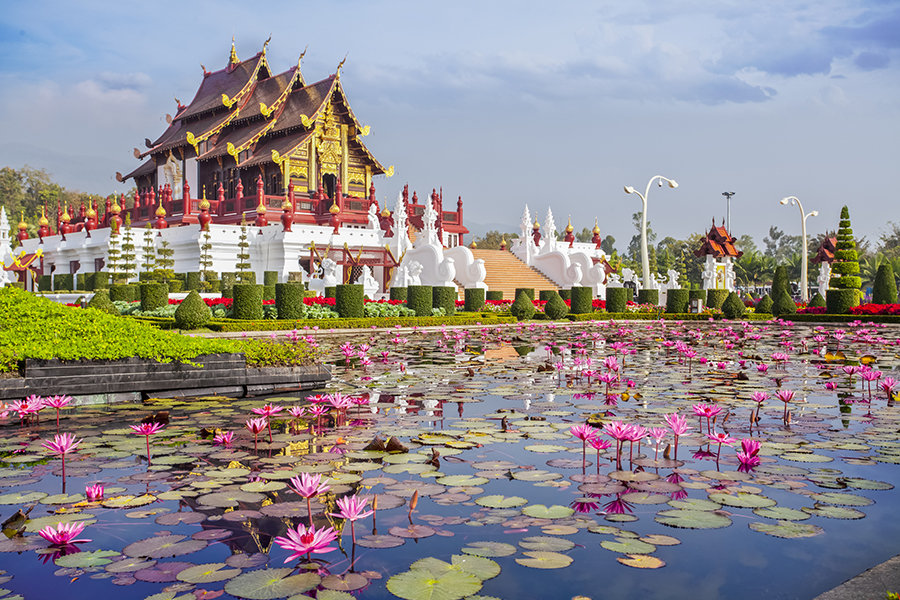
Chaing Mai Royal Pavilion
Chiang Mai is Thailand's second city set deep in the north of the country, surrounded by forests and mountains and the ideal base if you want to explore the area. The city itself is small but with a rustic charm that captures many people as soon as they arrive. With shops, restaurants and bars galore, you can't run out of things to do here, so much so that some people I was travelling with eventually decided to move here! Make sure you hire a moped and zoom up to the top of Doi Suthep to see the Wat Phrathat temple and for stunning views out over the city. Watch out for the hairpin bends!
Getting there: Chiang Mai is an easy hop from Bangkok, whether you decide to fly up or take the train. When I lived in Thailand I took the train to Chiang Mai many times and would absolutely recommend it as a way of getting around the country. The night train leaves Bangkok in the early evening and arrives into Chaing Mai station at around 9am. For full details on the train times, visit Seat 61 (a brilliant train website) or the Hua Lamphong station in Bangkok when you arrive. You are allocated a wide seat which, at around 9pm gets turned into a bed by the train attendant. I would also recommend you book the lower bunks as they are slightly larger plus you will have a window. If there are two of you travelling this means that you will be sitting side by side with the aisle in between you, rather than opposite one another.
Highlight: It's hard to pick a highlight in such a great city but my day with the elephants has got to be it. Baan Chang Elephant Park was where I did a 1 day Mahout Training course. Consisting of getting to know the elephants before feeding, taking them for an hour long ride into the wood for some more food and eventually washing them, this was one of the most fantastic experiences of my life, let alone just in Thailand. The most important thing about this is that you MUST BOOK ONLINE. In Thai 'Baan Chang' just means 'happy elephant' and simply requesting an elephant experience day at 'Baan Chang' will not guarantee that you go to this camp. Booking online means that you can directly tell them your hotel name and they will come and collect you personally.
Don't miss: A strawberry and banana smoothie at the Funky Monkey Cafe!

Chiang Rai

Sunrise at Phu Chi Fa, Chiang Rai, Thailand
Chiang Rai is the perfect base for a visit to the Golden Triangle, the area where Thailand, Laos and Burma meet and the mighty Mekong merges with the River Ruak. This beautiful area of the country is perfect for hiking and trekking, whether you fancy a week long trek or just a short walk through the hills. It is a good area to come and find a boutique hotel and absolutely relax after an action packed trip to Thailand. The city also has a bustling weekend night market and is a hive for local produce and crafts from around the area. If you want to pick up some genuine Thai products on your trip, this is the place to go!
Getting there: Chiang Rai is in the far north of the country and does not have any train links that reach it. If you are missing out Chiang Mai, then it is easiest to fly from Bangkok straight to Chiang Rai but if you want to combine the two, there are plenty of bus services between them each day.
Highlight: The trekking in this area is fantastic but it's who you'll meet while you're walking that will really make this trip a highlight. The hill tribes of the area live simply but are some of the most friendly and welcoming you'll find in Thailand. It's a great of finding out how they live their day to day lives and enjoy the north of Thailand at a relaxed pace.
Don't miss: Khao soi - the tastiest noodle dish in northern Thailand. Made using both boiled and deep fried egg noodles and mixed with cabbage, shallots, chilli and usually pork in a coconut based sauce - the combination of crunchy and soft noodles is fantastic! It's a common street food in the area and although available in other areas of the country, this is definitely the best place to try it.

Khao Yai National Park

Elephants at Khao Yai National Park, Thailand
Khao Yai National Park is the oldest national park in Thailand and is a fantastic place for wildlife spotting. Elephants, muntjacs and bee-eaters are commonly seen but the more rare animals include tigers, sun bears, gibbons, crocodiles and leopards. Doing a wildlife tour is your best chance of spotting any animals; an English-speaking guide will accompany you around the park and help you spot things that you otherwise might miss! There are several lovely waterfalls that can be visited as well as the bat caves where, at dusk, you can watch thousands of the creatures as they launch themselves into the night.
Getting there: From Bangkok you can catch a train or bus to Korat, which leave throughout the day. From there it is easy to get a songthaew (a shared taxi) to the park's entrance.
Highlight: Khao Yai is one of the few places in Thailand where you can still see wild elephants. To get the best chance of spotting them, go on a night wildlife tour and wonder at these marvellous creatures, somehow so different from their tamed cousins.
Don't miss: Khao Yai Winery for a taste of Thailand's finest wine. Perhaps an unexpected place for a vineyard, the wine from this area has been served on Thai Airways flights and is one of the best places in the country for tasting and touring vineyards. With a restaurant looking over the estate, the Khao Yai Winery is the perfect end to any trip up north.

Ayutthaya 

Wat Chaiwattanaram Temple, Ayutthaya, Thailand
Ayutthaya was made the capital city of Siam in 1350 and by the 18th Century was one of the most important cities in Asia. In 1767, the Burmese invaded and almost the whole city was burnt to the ground. All that remains are the stone relics of the temples and palaces that survived the blaze, situated on their island in the middle of the Chao Praya, Pa Sak and Lop Buri rivers. Although the temples are only ruins, it is still important to dress modestly and respect the various temple complexes throughout the island.
Getting there: From Bangkok, you can either take the train or get a minibus from Victory Monument in the centre of Bangkok. Minibuses usually leave when they are full and take around an hour to reach the temples. The train takes slightly longer but is a great way to see some of the country on your way up to Ayutthaya.
Highlight: Renting a bicycle and riding from temple to temple is the best way to see the city. City maps are available for free and it is a great way to explore if you'd rather be independent.
Don't miss: Just off the island there is an elephant park where you can visit and feed some elephants. It is mainly an overnight park but it easy to visit for half an hour or so and buy a bucket of cucumbers to feed the elephants.

Kanchanaburi

Bridge Over the River Kwai, Kanchanaburi,Thailand
Kanchanaburi is the gateway to the River Kwai and all of the historic museums and relics that surround the area. In World War II, 16,000 prisoners of war and 90,000 Asian workers died working on the Thailand-Burma Railway, more commonly known as the Death Railway. The bridge over the River Kwai, made famous by the film of the same name, is able to be crossed on foot, with several "pull in" areas available for when the train comes. The area has several museums where you can learn about the history of the area, the best of which is the Thailand-Burma Railway Centre, next to the cemetery. It is an interesting place to visit but be prepared to learn about the horrors that occurred here.
Getting there: Easy to reach by both bus and train, Kanchanaburi is a regular stop on tours of Thailand, thanks to its bloody history. From Bangkok, the minibuses leave Victory Monument when they are full and are probably the easiest method of transport to the area. Trains leave from Thonburi station in Bangkok which is less central than the main Hua Lamphong terminus. The morning train leaves at 07.50 and the next is not until after lunch so make sure you have time to get there, otherwise take a minibus.
Highlight: The Kanchanaburi War Cemetery is one of the most humbling places you can visit in Thailand, with over 7,000 graves of prisoners of war from Australia, the Netherlands and the UK. Some of the graves bear moving personal inscriptions from family members where other merely mark the grave of 'A Soldier of the 1939-1945 war'. It is a moving place to visit and is beautifully maintained - a lasting tribute and resting place for many men.
Don't miss: The Erawan Falls in nearby Erawan National Park are an amazing place to visit from Kanchanaburi, especially if you are there for a few nights. The 7 tiered waterfall has brilliant pools for swimming but make sure you bring good walking boots as the trail to the top can be tricky. Easily reachable to tuk-tuk or public bus.

Tours

If you'd like to experience the north of Thailand but you fancy joining a group of like minded people, we have a whole host of tours that might appeal, from short treks to a full two week trip.

Northern Thailand Discovery
Meet saffron-robed monks, visit hilltribe villages and delve into the different on an adventure that includes Thailand's wild northwest corner. With a 3 day trek into the Thai countryside, it doesn't matter whether your crossing the bridge in Kanchanaburi or cycling amongst the temples of Ayutthaya, this trip will let you really absorb the spirit of this diverse country.
 
Chiang Mai and the Golden Triangle
Take time to get to know Thailand's second city of Chiang Mai. With shops, markets, temples and street food galore, a visit to Doi Suthep is a must do, before heading to Chiang Rai to meet the elephants. Finally venture by boat to the threshold of three different countries—the Golden Triangle—where the borders of Thailand, Burma (Myanmar) and Laos meet.

Northern Thailand Hilltribes Trek
This tour is perfect for someone who wants to get to Chiang Mai under their own steam (whether its by flight or train) but then wants an organised tour of Northern Thailand waiting for them when they arrive. With 4 nights camping this is a real deal trek, where you'll get to experience the beauty of the countryside and meet the hill tribes that inhabit the area. Also features an elephant ride and a rafting experience after all that walking!

10 Best places around the world to go sea kayaking

Kayaking peacefully through rippling, clear water and looking for exotic wildlife amongst stunning scenery is high on my list of must-do activities! Sea kayaking in particular gives you a fantastic opportunity to get really close to local marine life, and is one of the cleanest and greenest activities you can be doing!
Since my first kayaking experience in Halong Bay in the North of Vietnam, I haven't looked back. Slowly weaving amongst the emerald islands and limestone scenery is a peaceful and scenic way to sight-see. Off the back of my own growing passion, here's my round-up of the 10 best places around the world to go sea kayaking...

1. Tahiti

In French Polynesia, kayaking is more of a relaxing pursuit than an adventure sport. In Moorea, you can drift along with the gentle currents and enjoy the crystalline waters - it's easy to see why they call this place heaven. The water is so clear you can see the fish from your kayak so it's a great way to see the marine life if you don't fancy getting wet. Spot rays, dolphins, whales and all sorts of brilliantly coloured fish - a great way to experience the lagoon-life from above.
Sea kayaking in French Polynesia

Want to speak to someone who's tried it?

Jonny has visited French Polynesia and was lucky enough to enjoy a spot of sea kayaking over the reef in the lagoon in Moorea. If you'd like to do the same, he can talk to you!

2. California, USA

The Californian coastline offers a wealth of sea kayaking opportunities from the rocky seashore of Santa Barbara to the open water of Monterey. The Channel Islands National Park lies 24 miles offshore of Santa Barbara, close to Los Angeles. Despite the built up coast of California lying so close by, these pristine islands have remained mostly undeveloped and the chance to kayak amongst the sea caves and inlets with the Santa Barbara Adventure Company is one you must take up if you're in the area.
Further north in Monterey you could combine sea kayaking with another of my favourite pastimes - wildlife watching. The native sea otters are a lively bunch and here you can kayak incredibly close to the cuddly creatures with Monterey Bay Kayaks, as well as spotting seals, sea lions and lots of bird life along the mid-California coast. It's a moving experience to be so close to these beautiful creatures and watch their behaviour as they swim amongst the abundant kelp beds.
Sea otters at Morro Bay, California

Speak to someone who's kayaked in California:

Cole

3. Belize

The clear waters and bustling reefs of Belize make it a prime candidate for anyone searching for a great place to go kayaking - in fact Belize is home to the second largest reef system in the world, after the Great Barrier Reef in Australia. Beginning at the popular Ambergris Caye, you'll first get the hang of your sea legs in the spectacular, shallow waters before moving south to the Great Blue Hole in Lighthouse Reef where you'll experience the intense colours of the dark, deep water.
Sea kayaking in Belize
Island hop down to Placencia where you can kayak along the stunning atoll of Gladden Spit where from March to May, whale sharks can be glimpsed at full moon, feeding in the rippling waters. For the best kind of desert island experience, catch a boat to the tiny Laughing Bird Caye and paddle around spotting dozens of multi-coloured fish before settling on the beach for a picnic lunch in this island paradise.

Want to speak to someone who's been?

Elodie recently visited Belize and she has also kayaked in the Caribbean.

4. Halong Bay, Vietnam

Halong Bay in Vietnam was the first place I ever got in a kayak and what a great place to start! High rocky islands are scattered throughout the bay like emeralds thrown into the water. I found paddling between them to be a very special experience, made even more impressive by the local knowledge of the guides on board our Chinese junk boat. We ventured underneath secret tunnels and emerged in enclosed lagoons with high green walls of stone. At the end of the day you can kayak right up to one of the floating villages of the bay and settle back with a beer watching the sun set into the teal waters.
Sea kayaking in Halong Bay
See round the world flights including Vietnam

5. Milford Sound, New Zealand

Kayaking in Milford Sound is a popular activity on any visit to New Zealand. As one of the many high fjords that slice through the South Island, Milford Sound is one of the most visited places in New Zealand and a brilliant place to kayak.
Rosco's Milford Kayaks have been operating since 1991 when Rosco, the owner was the first one to offer guided kayak tours of Milford Sound. If you love penguins, head to Milford in November and you can spot Fjordland Crested Penguins both in the water and on the rocky shores. The area is one of the wettest in New Zealand and the high levels of precipitation create both permanent and seasonal waterfalls, including the impressive Bowen Falls.
Sea kayaking in Milford Sound, New Zealand

Speak to someone who's kayaked Milford Sound:

Anna has kayaked in Kaikoura. Matt and Laura have also kayaked in New Zealand - contact any of them for advice!

6. Koh Phi Phi, Thailand

Koh Phi Phi in Thailand is heaven to explore by kayak. With no pollution or noise, it's easy to explore the inlets and hidden coastlines of the rugged shore by man power and paddling amongst the rocky islands is a great way to discover the area. In Thailand, the snorkelling is top class and in Koh Phi Phi you can do it straight from your kayak. It's a brilliant experience but here you can do even more than that - how about fishing? Using different techniques, you can catch red snapper, mahi mahi, wahoo and sailfish around the coastline of Koh Phi Phi, all from the comfort of your kayak. Not a bad way to catch your supper, is it?
Sea kayaking in Thailand

Speak to someone who's kayaked in the Thai islands:

Emma, Mark, or Elodie

7. Maine, USA

The Maine Trail is a 375 mile waterway along the entire coast of Maine, in the north east USA. With camping available along the parallel shore kayaking into the rocky inlets and bays, past sandy beaches and river mouths, is a great way to experience the great outdoors in New England. The highlight of the trail is Acadia National Park, which it passes through in the northern end of the state. This beautiful National Park is a joy to explore by kayak and is heaving with bird-life, many of which you can see along the shoreline. Only a couple of hours from Boston, Maine has a rugged, scenic coast that is easy to reach but remains quiet and peaceful. After a day's kayaking, hop ashore and enjoy a cold beer and a fresh lobster roll as the sun sets into the Atlantic Ocean.
Sea kayaking in Maine

8. Johnstone Strait, Canada

The Johnstone Strait lies between Vancouver Island and mainland Canada and is a magnet for kayakers looking for a wildlife experience. It's one of the best places in the world to see orcas and you have the chance to paddle among them. If you want to spot an orca, head to Vancouver and out to Vancouver Island where Ecomarine run kayaking trips where gliding  through scenic waters with magnificent whales is all you think about for several days. Surrounded by Canada's trademark raw beauty, you'll spend your days along rugged coastlines lined with forest - it's a great way to see the island from another perspective. It's not just whales to be excited about; from your kayak, you could also spot bears, porpoises, seals and dolphins.
Sea kayaking in Johnstone Strait, Canada

9. Tasmania, Australia

The coastline of Tasmania, Australia is an unspoilt wilderness with opportunities to jump into a kayak from even the most unlikely of places. Fancy a kayak tour of Hobart's waterfront, just minutes from the city centre? Urban Adventures can grant your wish with The Hobart Paddle! If you prefer to head into the wild, both the east and west coasts provide stunning views of the rugged shores and marine wildlife that surrounds Tasmania - perfect viewed from the seat of a kayak. Coles Bay in eastern Tasmania is a particularly beautiful spot to enjoy the water - relax as the sun lights up the pink granite mountains and look out for dolphins swimming in the cove.
Sea kayaking in Tasmania

10. Fiji

For clear paddling in warm water, Fiji is an ideal destination. The Yasawas, a chain of volcanic islands to north of Viti Levu, are the best place to get in the water and enjoy the peaceful atmosphere of Fiji. Only around a third of Fiji's islands are inhabited so as well as sunshine you can enjoy the peace and quiet of these serene islands. Jump into the water and snorkel right from the kayak amongst brilliant fishes and coral of the Blue Lagoon.
Sea kayaking in Fiji

The Bodel family round the world trip including India

In 2013, The Bodel family set out on the trip of a lifetime, with some help from Travel Nation. This American family of four set out to cover 4 continents in 10 months, including a longer stay in India.
I asked them about how they planned their trip, and what it was like being away with children. They've given us some honest answers and some tips for anyone planning a family round the world trip or a family trip to India...

The Bodel's itinerary:

London – Udaipur // Delhi – Cochin – Colombo – Siem Reap – Chiang Mai // Bangkok – Sydney – Santiago – Buenos Aires – Lima – Calgary - London

Can you tell us a little but about yourself and how you came to be considering a family trip like this (who travelled, how old are the kids)…

We are a family of four, with children aged 5 & 7! We are have always wanted to travel to India so included it in our around the world adventure.
Delhi, India

What sort of travel experiences had you had together before this?

Both parents have travelled before having children, with gap year trips including Nepal, South East Asia and Australia/New Zealand. As a couple and family we have travelled in Europe and North America for holiday, doing a range of types of holidays including weekend city breaks, ferry hopping in Croatia, trekking in the Alps, camping in Upstate New York, and taking the kids to Disneyworld.

How did you come across Travel Nation?

We found Travel Nation when looking to book our round the world air ticket. Our travel consultant, Adam, provided excellent service with that ticket, and was able to find a better route for us at a very competitive price than the other travel agent we had contacted. So, we decided to use Travel Nation to organize our trip to India. We had always wanted to explore India and wanted this part of our trip especially to be magical and hassle free.
Close up portrait of a mother and child

How did you decide which places you’d like to visit and which was top of your list?

We had a very basic idea of the areas we wanted to visit in India based on conversations with friends. After a phone call with Adam he put together a very interesting itinerary which covered the areas we wanted to see. We then got feedback from friends and worked with Adam at adjusting the details of the itinerary. Travel Nation was very good and working with our needs in order to create a tailored trip that was exactly what we wanted. We were able to add one of our own hotels and stops, but also left it to Travel Nation to make most of the selections - their choices in almost all cases were excellent!

How long do you think it took you to plan the whole trip and get it booked?

We had a lot of back and forth with Adam about our trip, as we had many questions, having never booked a trip like this before. Altogether it probably took little over a month to finalize the broad details. There was also flexibility to make some changes after we had made the booking so it really was an ongoing process with which Adam was extremely patient and helpful.

Were there any destinations you ruled out, if so why?

Within India we had a good idea of where we wanted to go - it is a very large country so naturally we ruled out places due to time constraints, weather, and suitability with children. We had looked into adding a trip to Burma, but decided that now was not the best time for us to visit there due to the cost. We did also visit Cambodia and Sri Lanka for shorter excursions and used Travel Nation. The Cambodia portion of the trip was especially excellent value and quality.
Angkor Wat, Cambodia

Did you make any concessions or special arrangements because you were travelling with kids?

We may have tried to go it by ourselves, rather than use Travel Nation, if we were not traveling with kids. However, I felt that with kids or not, the value and quality of service we received for our India trip made it worth using a travel agent. The main other concession would be ensuring that our itinerary was not too full - although we saw a lot we worked in some downtime and extra rest days. Adam was very helpful with accommodating our wishes in this area.

Was it difficult to get time off from school and from work? What did you do about schooling?

The India trip was part of a one year around the world trip with our family. So, we have left our jobs and are home-schooling the children for one year. It has had its challenges but has been worth the experience.

Did you book everything ahead (accommodation, tours) or book as you travelled?

Given that accommodation for four is not always straightforward, we booked everything in advance. In general we had the first six months planned before we set out, and set aside time part way through to organize the next six months. Our tours in Asia were organized well in advance, thanks to Adam and Travel Nation. We did manage to add things that were of interest once we got there though (for example, National Park visit and Whale Watching in Sri Lanka).

Tell us about what you did in India, what you saw, how you travelled

We toured a number of cities in Rajasthan, mostly traveling by car with the same (excellent!) driver Mr. Davindra for this part of the trip. Where it made more sense to fly (due to distance) we did and we also used the train from Ranthambore to Agra based on advice from Travel Nation. (This turned out to be excellent advice as we heard reports from fellow travellers that the road between Ranthambore and Agra is terrible - thanks!) We visited Udaipar, Narlai, Jodhpur, Jaipur, Ranthambore, Agra and Delhi. In each city we toured the major attractions with a local guide. In Kerala we travelled by car and again had an excellent driver (despite his youth he was relaxed and helpful the day that both children were car sick - he was also a very safe driver on some very windy roads). There were some local protests and a general strike which disrupted our itinerary in Kerala but the local agent took care of all the arrangements and rescheduled some of our stay such that we were really not impacted. We saw Kochi, Trekked, Kumarakom, the backwaters and finished at Marari Beach Resort.
Amber Fort, Jaipur, India

Did you have any health concerns for your children before you arrived in India, or were you concerned about the availability of good medical care if they got sick? If so, how did you address these concerns?

We were concerned about what would happen if anyone needed medical attention, especially the children. Luckily no one was sick enough to need a doctor in India. In Sri Lanka and Cambodia my husband had an ear infection and the hotels were able to organize a doctor to come and see us. Again, one of the reasons we used an organized tour company and stayed in nice hotels was for the security of having help if an emergency arose.

Do you think the children experienced culture shock? And did you experience it too?

The culture shock was less than I expected. Staying in nice hotels and being driven around does mean that perhaps you are not as exposed to the culture as you could be?

How did your children react to India and to other Indian children they saw or met?

One disadvantage of an organised tour and traveling outside of school holidays is that our children had very limited experience with other children, either Indian or other nationalities. My son and daughter did have a very fun time running up and down the hill with large groups of school children in Delhi near Gandhi's memorial. We also had a good football match on the beach with some local children in Kerala.
Kids, Dehli, India

What did the children enjoy most?

Our kids loved the experience of seeing the tigers in Ranthambore National Park. Equally nice for them was house boating in the backwaters of Kerala - it was so peaceful and our crew was wonderful to them!
Tiger, India

Was there anything you didn’t enjoy and would recommend skipping?

Not in India. Perhaps one less day in Kochi as there is not much to see in the town once you spend an afternoon in the Old Town (it did have some great restaurants though!).

Anywhere you wish you could have stayed longer or seen more?

I honestly feel like it was well-balanced. I did not feel rushed, although we were constantly on the go except for the last week of the trip to India. While there were a few places I really loved (Ranthambore, Backwaters of Kerala) I think that longer would have been too long.
Backwaters, Kerala, India

Which one thing were you looking forward to the most before you left?

Finally seeing the colour, noise and surroundings of Rajasthan, after hearing about it from so many people.

Which one thing worried you the most before you left? On reflection, was it a legitimate concern?

I was most worried about what we would do if we all had Indian "stomach problems" on a travel day - some of the driving days were long with limited facilities en route. Again, we had no major problems (all of us were unwell at some point, but it was just not as bad as I had imagined and thankfully did not delay us or impact our travel).

What experiences do you think the children benefited from the most on this trip?

Every day was different; despite the tour being quite "adult" the guides were interesting and pointed things out to the kids.

Was there anything you experienced as a family that other travellers would miss?

It became an ongoing joke that people in Northern India constantly wanted to photograph themselves with our children, and hug them. In the end my son was saying - "I think more people are coming dad, I see those guys over there straightening their collars and getting their iPhones out…"

What tips or recommendations do you have for other families wanting to plan an adventure, or families wanting to travel in India specifically?

I think it's important not to pack too much into the time you have. Leave some time to unwind - to have a holiday from the holiday if you will. For people that are trying to home-school on the road, as we were, I think you have to realize that the experience the kids get traveling is an outstanding education on its own so don't worry too much about formal lessons apart from the basics. We took a basic math and reading curriculum that suited what we needed. As far as India goes, we tried to eat fairly carefully, avoiding things washed with the water, etc. but the quality of places we stayed helped with that quite a bit.

Would you do a family trip like this again if time and money were no issue?

Of course! But next time I think instead of going to so many places over the course of a year we'd pick 3 or four places to stay for multiple months and really get to know them.

Stopping over in Sydney

ydney is by far one of the most iconic cities in the world. Sun and surf, sophisticated shopping and stunning beaches; however long you spend in Sydney, chances are that you’ll wish you’d stayed longer - it’s just that kind of place. Pretentious meets casual in this uber-cool metropolis where there is always something shiny and sparkly to chase. If you can possibly spare it, this fantastic city deserves at least a few days of your time and if you plan to incorporate nearby attractions like the Blue Mountains and Hunter Valley extend your stay to at least a week or so. Here’s our guide to stopping over in Sydney…

When to go

Temperatures are mild to hot throughout the year with damp winters and hot, sunny summers. The summer months (November – March) are the best times to visit.

Getting around

Sydney Airport is about 6 miles (9km) south of the city centre with well-connected transport options. The Airport Rail Link service connects the airport to the city centre, as well as buses, taxi cabs and shared shuttle buses which offer a reliable door- to- door service – we can arrange your transfers alongside your flights if you would prefer. Traffic congestion can be an issue in this city so avoid hiring a car and use metered taxi rides or public transport where possible. Trains, ferries, trams and the monorail loop make for a variety of pleasurable and interesting ways see this spread-out city.

Where to stay

Most of the recognisable international chains tend to be located in Circular Quay and The Rocks in the city centre and these mostly cater for business and mid-high end travellers. There is a handful of centrally-located cheaper options available – including the Wake Up! Sydney Central backpackers hostel – and you should check out Kings Cross and Glebe as places to stay that will save your dollars. Everywhere is easily accessible by public transport, so you can choose an option to suit your budget, and whether you are looking for cheap backpackers, self-catering apartment or a luxury hotel, there are accommodation options in Sydney to suit every style and budget.

What to see and do – our favourite picks!

Royal Botanic Gardens If there are botanic gardens anywhere in the world with a better setting than Sydney’s, we are yet to find them! These beautiful, two hundred year old gardens are right in the centre of the city and run along the edge of the waterfront on Farm Cove. One minute you’re admiring the outstanding collection of native and foreign horticulture, the next you’re gazing over the majesty of Sydney Harbour in all its glory, Opera House and all.The gardens also host a huge variety of wildlife – keep your eyes peeled for creatures as diverse as Rainbow Lorikeets, Flying Foxes, Possums and Eastern Water Dragons.
Royal Botanic Gardens, Sydney
Mrs Macquaries Point and Chair is one of the most famous photographic spots in Sydney with views across the Harbour to the Harbour Bridge and Opera House. Back in the 1820’s, Mrs Macquarie, the Governor’s wife, had the chair carved out of the rock so she could sit and watch the ships pass by.
Spit Bridge to Manly walk around the northern side of Sydney Harbour is a fantastic way to discover the different beaches, bays and bush land around the harbour, without spending a cent! This scenic walkway is in fact a series of short tracks of 1-2km, with the entire walk extending to just over 9km - an easy 3 to 4 hour stroll.
Walk to Manly, Sydney
Coogee to Bondi 6km coastal walk. From the Botanic Gardens, stroll back to Circular Quay and jump on a bus, the journey takes around half hour. The walk from Coogee takes you north along the coastal path on waterside boardwalks and cliff top paths, with sensational views along the coastline, before arriving in Bondi.
Bondi Beach, Sydney
Sunrise over Sydney harbour make an early start and find your way from your accommodation to Circular Quay, Sydney’s bustling port area. Grab a coffee and then hop on a ferry to the northern beach of Manly – ferries depart every half hour and the journey takes around 25 minutes. You should have plenty of space as you’re going against the commuter tide of workers travelling in to central Sydney from the northern beaches – not a bad commute! Assuming you made it up early enough, the close up views of the Opera House and Harbour Bridge as the sun is rising over the Pacific Ocean make this a truly magical experience.
Sydney Opera House
Wander around the historic Rocks the birth place of Sydney when it was a penal colony back in the late 18th Century. Today it’s an absorbing area to explore: a maze of cobbled lanes lined with historic landmarks, colonial buildings and lots of places to eat and drink.
The Rocks, Sydney

Exploring further afield

The Blue Mountains is a 60-90 minute drive, ideal for a day trip. Head to this region of stunning natural beauty to witness the majestic rock formations named the Three Sisters and spot the eastern grey Kangaroos in their natural habitat. Take a 4WD tour through the mountains and visit Katoomba (home to the steepest passenger railway in the world!)
Illawarra Fly Treetop Walk is around 90 minutes south of Sydney in the Southern Highlands. This attraction literally takes going for a walk to new heights. A 500m walk in the treetop canopy ranging from 20m to 45m above the forest floor. The tower has 106 steps and opens to breath- taking views from the escarpment over the Illawarra
Glenworth Valley is around an hour’s drive north on the Central Coast. Home to Australia’s largest horse-riding and outdoor adventure centre, this is an adventure paradise set on more than 1200 hectares of pristine wilderness. Natural rock pools and ancient native rainforest make the perfect setting for abseiling, kayaking, fishing, laser skirmish, bushwalking, camping, and quad biking. Venture out this way if you want a break from the laid back beach days.
Hunter Valley is around two hours’ drive north of Sydney and is Australia’s oldest commercial wine producing district with over 7000 acres of vines. Rolling hills and valleys are dotted with wineries and villages which all offer sumptuous cuisine and award winning wines. Historic villages and magnificent waterways cross your path as you head to this region, making for a great trip to explore further afield.

Interested? How to include Sydney as a stopover

Sydney is a very popular stop on any round the world ticket, with plenty of opportunities to explore Australia further, with internal flights to Melbourne, Perth and Brisbane; an east-coast self-drive up to Cairns, campervan rental options from shoestring to deluxe RVs. The country really is easy to explore! If you’d like some more ideas about how to explore Sydney and wider Australia, and for ideas for tours and accommodation, give our experienced and friendly consultants us a call on 01273 320 580 or request a quote!

Some ideas for flight itineraries that include Sydney:

London - Dubai - Bangkok - Sydney - Johannesburg - London Flights from £1,125 pp including taxes
London - Tokyo // Osaka - Hong Kong - Sydney - Auckland - Noumea - Papeete - Los Angeles - London Flights from £1,695 pp including taxes

Summits for Softies: Add a challenge to your round the world trip

For those of us fortunate enough to embark on a round the world trip, it’s likely to become the single most exciting and intrepid thing we ever do. What better way to embrace this spirit of adventure than to take on new challenges whilst you’re away – pushing yourself to achieve things that you once thought impossible?
It’s hard to think of a greater sense of achievement than reaching the summit of a mountain. That feeling of elation and relief as you look down on the world far below, knowing that you have made it.However, if the idea of mountain climbing conjures up unwelcome images from ‘Touching the Void’, we’ve listed some mountains you can tackle with no climbing experience. You won’t need ropes, ice picks or oxygen tents - just a guide (in some cases), a good level of fitness, a sturdy pair of walking boots and a lot of will power! What’s more, they are all easy to include on a round the world ticket!Whilst these summits can’t really be considered a walk in the park, we’ll begin with the easiest and work our way up. Ready?

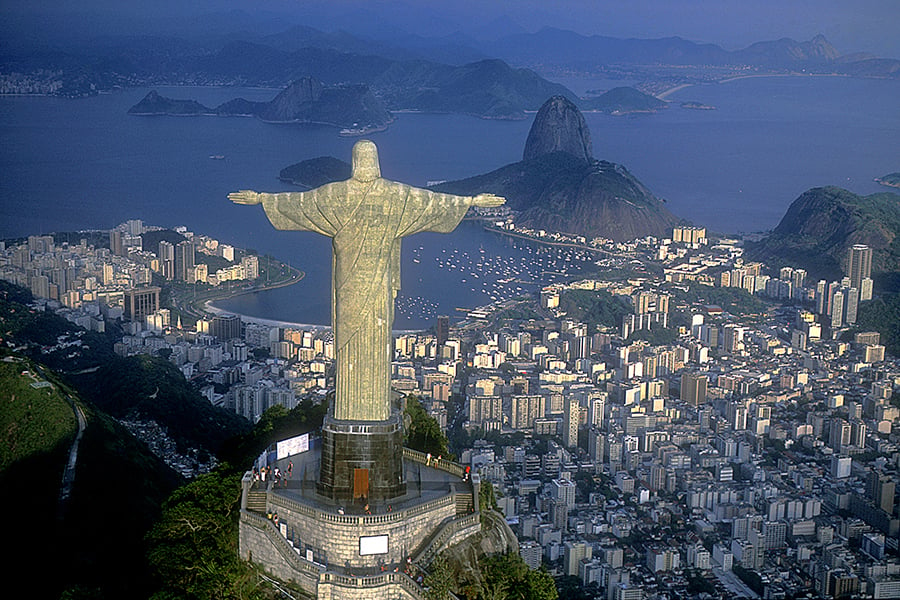
The Corcovado: Rio de Janeiro, Brazil – 710m

Statue of Christ the Redeemer, Corcovado, Rio, Brazil
You might not know the name but you‘re sure to instantly recognise this iconic landmark. The granite peak of the Corcovado is best known for being home to the statue of Christ The Redeemer that watches over the city of Rio de Janeiro. There is a road and a tourist train to the top, but to get maximum enjoyment from the incredible views over the sprawling city, beaches, ocean and across to Sugarloaf Mountain, you’re best off hiking all the way to the summit and earning the views!Off the beaten track this is not, so don’t expect to have the place to yourself! However, as you mingle with the hordes at the top, at least you can feel smug in the knowledge that you’ve done it the hard way. The best part is that you can get the train or bus back down to Rio, making Corcovado an essential summit for softies.strong>We can also help you organise a tour in Brazil, like the 17 day Brazil and Argentina tour ‘In Search of Iguassu’.

Table Mountain: Cape Town, South Africa – 1,084m

Cable car, Table Mountain, Cape Town, South Africa
Dominating the Cape Town skyline, the distinctively flat-topped Table Mountain is one of the most recognisable natural landmarks in the world. While it’s certainly an impressive sight to gaze up at from the city, if you want to see how the world looks from the top, it’s only a short hike away.There are an incredible number of different paths to the top (as many as 350!) and some are much easier than others. The path along Pletteklip Gorge, for example, is one of the most direct and straightforward. It should take between 2-3 hours depending on your level of fitness, and your efforts will be more than rewarded once you take in the unforgettable views over Cape Town and out across the ocean from the summit. You can then hop on the cable car to take you back down to Cape Town to have a celebratory beer or two!

Mount Kinabalu: Borneo, Malaysia, 4,095m

Mount Kinabalu, Borneo
The highest peak in South East Asia, Mount Kinabalu is located within the beautiful Kinabalu National Park, a World Heritage Site in Borneo. This is the first of our ascents where altitude sickness could be an issue - if you start to feel at all unwell, descend slowly.The climb begins from the park headquarters (1800m), taking you up to Laban Rata (3273m) metres for your overnight stop, before attempting the summit early the next morning. Whilst the trek up to Laban Rata is not technically difficult, the steps carved into the mountainside are steep and so relentless that, unless you’re super fit, you’re likely to feel the effects in your legs for several days after.It takes around 4-6 hours to reach your overnight lodge for the night, where you can relax on the terrace and soak up the panoramic views across Borneo. Be prepared for an early start the next morning for the steep scrabble to the top – high above the clouds, watching the first rays of sun cast a golden glow over the jagged mountain tops, is a worthy reward for making it to the summit. We can help you organise some amazing adventures in Borneo, like the 19 day G Adventures tour, ‘Borneo Encompassed’.

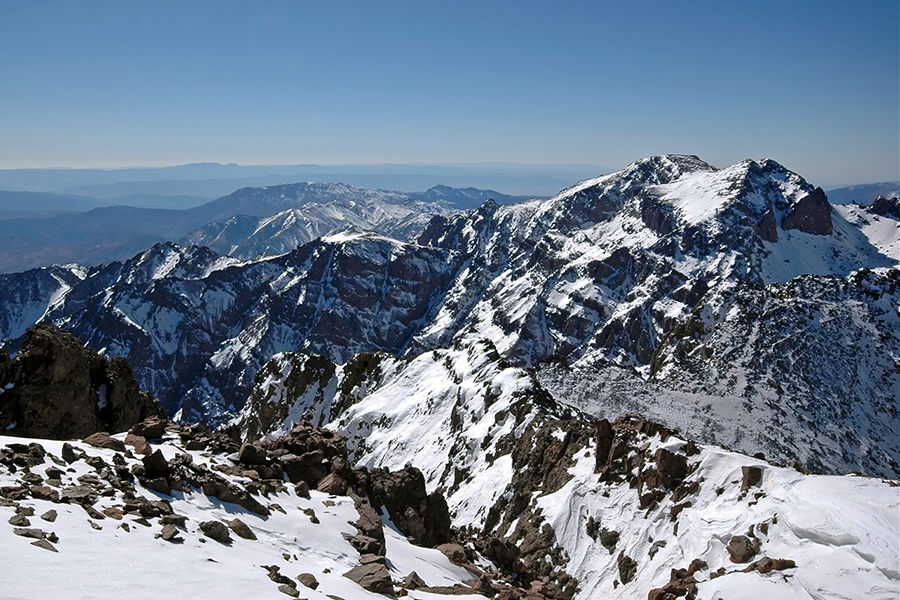
Jebel Toubkal: the Atlas Mountains, Morocco, 4,167m

Jebel Toubkal, Atlas Mountains, Morocco
Dominating the skyline of the exotic city of Marrakech, Jebel Toubkal is the highest mountain in the Atlas range. This challenge actually involves quite some effort just to reach the start of the climb. Your trek starts from the mountain village of Imlil - from there it’s a full day’s hike to the refuge where you overnight, before attempting the summit the next morning.As late in the year as May, you can be trudging through snow before you even reach the refuge; the best time to go is between June and September, otherwise you’re likely to need crampons and the whole thing just gets more technical, which is not what we are looking for here!The Refuge de Toubkal is the only place to stay and, while comfortable enough, sharing a dormitory with a dozen or so snoring strangers is unlikely to be the highlight of your trip. Get a head start by heading off early the next morning – it’s a genuine challenge to get to the top - a long, steep climb of almost 1000 metres.The sense of stillness and isolation that awaits you at the summit, not to mention the stunning vista across the Atlas Mountains and desert beyond, makes all the pain and struggle just melt away. We can find you a trekking trip into the Atlas Mountains as well as other tours in Morocco.

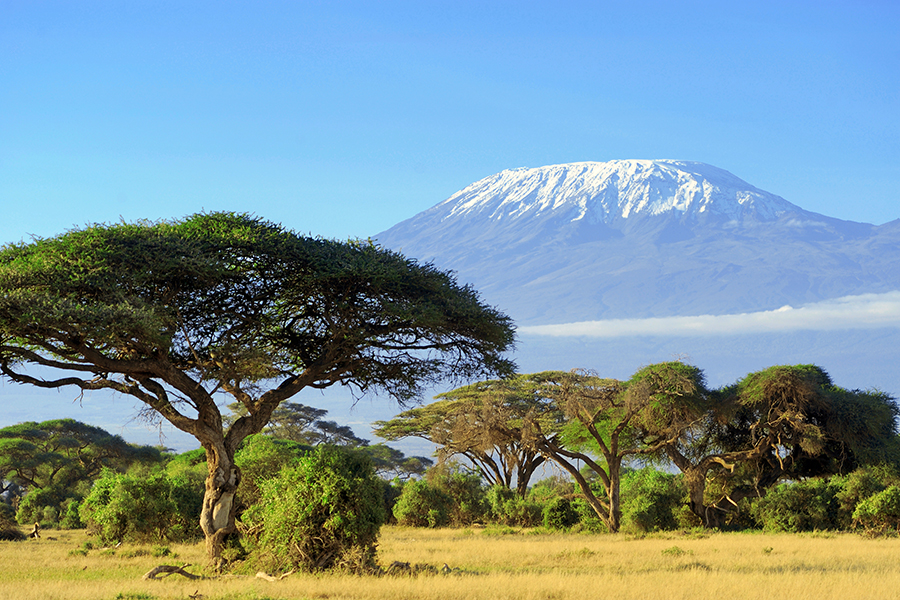
Mt Kilimanjaro: Tanzania (across the border from Kenya), 5,895m

Mount Kilimanjaro, Tanzania
Kilimanjaro is the highest mountain in Africa at almost 6000m - a dormant volcano that towers majestically over the plains of the Serengeti. It’s the highest walkable mountain in the world - and what a walk!It’s a real challenge, with your biggest potential obstacle being altitude sickness; to give yourself the best chance of avoiding this, the key is to take your time and ascend slowly. It takes most people 5-7 days, and there are a number of possible routes, the least difficult of which are the Rongai and Marangu.The sense of achievement on reaching the top, combined with the awe-inspiring vistas across the plains of Africa, make this an extraordinary, once in a lifetime experience. It’s a little disheartening when you realise that after several days climbing, it only takes one day to get back down, but that’s mountain climbing for you! We offer Kilimanjaro treks or combination tours of a Kilimanjaro climb with a Serengeti safari if you're interested in exploring Tanzania or Kenya.

Top tips for clever backpack packing

You've planned your destinations, booked your ticket and quit your job to set off on the adventure of a lifetime. As D-day approaches you start the task of whittling down your earthly belongings to fit into just one bag  - and one light enough for you to haul around over sandy beaches, ropey swing bridges and up hills.
Two words: pack wisely...
You’ve probably never needed to reduce your material possessions down to what you can carry (which can actually be liberating – but you don't want to be on the other side of the world finding you are missing essentials and have stocked up on useless items. So here's a guide to some of the things I have found invaluable over my 3 years of backpacking:

Bag choice

Firstly, unless you’re uniquely visiting big cities or setting sail on a cruise, I would strongly recommend a backpack over a suitcase. You'll need one with comfy straps (as I’m sure you will be lugging your bag around with sun-burnt back and shoulders at some point!). Next, choose one with a few compartments, so you can find your things without having to search through the whole bag. An invaluable feature I have found is having a backpack which fully folds open as opposed to just opening at the top. This lets you fish out the stuff at the bottom with ease and stops you needing to wear the same clothes day after day.
Top packing tip: roll your clothes instead of folding; saves space and easier to see everything.

Gadgets

Filter water bottle: I’ve recently discovered these and I believe every traveller should invest in one. Most countries you will visit will not have the infrastructure to recycle plastic water bottles and you don't want to be adding to a nation’s rubbish problem. These water bottles allow you to fill up from a tap and filter the water so you can drink away. You'll save money in the long run and can feel slightly smug about not getting through multiple plastic bottles a day.
Wind up or head Torch: I'm a fan of my wind up torch as it will never die, but a head torch is super handy for hands-free searching in the dark. If you find yourself in villages where the electricity is not on 24hrs a day – you can do a quick survey of the toilet before committing yourself in the darkness!
Bag lock: handy for an extra bit of security.
Universal adapter: essential for charging your gadgets en route – you can universal travel adaptors that convert every country to every country which save space.
Universal travel adaptor | amazon.co.uk
Kindle/tablet vs book: I’ve not yet been converted to the Kindle or the idea of downloading books as I love the actual ‘feel’ of a book. Loads of travellers I meet swear by them because you can download countless good books and you're not limited to your luck in finding a gem of a book in the swap shops. The downside is being limited by battery life, and any gadget is an additional draw for would-be thieves especially, at the beach and on buses.
Underwater camera: these are great as they can survive the knocks and drops of travelling, they cope with sand well, can be dropped in water and they still work. Mine has allowed me to snap away whilst jumping off waterfalls, snorkelling, tubing, caving, sand boarding and skiing - capturing the most active moments of each trip.
Wireless radio iPod tuner/transmitter: an ideal gadget for campervan road trips in Australia, New Zealand and wherever you don't have good radio signal- they cost peanuts and allow you to broadcast your iPod tunes over short wave radio for the car stereo to pick up and play through the speaker system.
SD card reader: another small and ingenious gadgets for you to transfer your photos direct from your camera’s memory card to a computer (and you can get card readers for tablets now too). You can quickly back up your photographic memories and a card reader takes up less space than a big cable.
Travel towel: one to buy before you go. These are highly absorbent, lightweight and very compact. Just don't do like me and leave your in your hostel room in Singapore on your 2nd night of your round the world trip.
Micro fibre travel towel | amazon.co.uk
Silk sleeping bag liner these can be bought online and I have used mine loads. If you're on a budget you will surely come across many a suspect bed linen. You can lay this on top or get inside to avoid the dodgy stains. Being silk it will keep you cool. Last night I used mine as there were a few cockroaches running around my hut so I cocooned myself in mine to the jealousy of my travel partner

Clothes

As you are only taking a limited wardrobe here's a few things to consider: ditch the high heels, glitzy dresses and countless white clothes. You'll probably find that casual cotton clothes will be the most used. Having met girls on the road who have giant bags full of high heels and numerous pairs of shoes, they have all regretted it. White things will get dusty/sweaty and grubby so to avoid too many laundry runs have some other colours in your bag.
One thing I have fallen victim to, is packing too many items of the same colour (I am currently in Central America and have far too many turquoise green items; two pairs of green shorts, two green tops, green dresses etc so if I wear these items together I look like I am trying to camouflage!) I also have a tendency to pack lots of patterned/coloured clothes which don't go with my other patterned things, so take a bit of time to make sure you have items that go with lots of other clothes in your backpack and to avoid looking like a colour kaleidoscope.
Hiking boots/trainers if you are planning on doing a lot of treks, and are a serious hiker you may well want to take a pair of hiking boots. I personally have done many a hike in jungles with only a shoddy pair of converse. Apart from this a pair of sandals/flip flops will be essential, until you lose them on the beach one evening and you'll have to replace. On my first round the world trip I got through about 25 pairs of flip flops.
Swimwear will become your new best friend; you'll probably find you'll ditch wearing undies in favour of your cozzie. Also take note of where you're going especially when visiting cultures that are more modest in their dress code. You’ll often need to cover head, shoulders and knees when visiting religious temples so pack some clothes for these situations and be sure not to offend. You’ll inevitably buy new clothes on the road, so leave room for clothes and souvenirs!

Other necessary bits and bobs

Toiletries - you won't need as much as you think and shampoo, conditioner, after sun, sunscreen, shower gel, toothpaste can all be bought around the world and often more cheaply than at home. If you have a particular essential item, take it, but you will probably appreciate the ‘less is more’ idea. Tiger balm is a 'cure all' essential so be sure to pick some up in South East Asia if passing through.
Medicines – again, unless you take specific medication, the basics will do as pharmacies can be found the world over. Also the miming of ailments in a far flung pharmacy is part of the experience of travelling and leads to many a funny travel tale!
Games - these are 'non-essential' but in my mind are the things you regret culling from your back pack. Often games will intrigue locals, providing spontaneous moments teaching kids new games, making friends with other travellers and meeting other like-minded people. I always take my fire and practice Poi as I quickly get bored on beaches. Also my snorkel and mask are always with me, so I can check out the fish wherever I am. Other great games include: a deck of cards (ideal for delayed travel situations) travel chess, juggling balls, travel hula hoop, devil sticks, travel staff, Dice for Yahtzee etc.
Sara on one of her diving adventures!
Remember pack light, leave room for things you pick up along the way and enjoy the freedom of having only a few possessions. We don't need half the material objects we’re led to believe, so enjoy living with your life on your back! Above all don’t forget to take your sense of adventure!

How to make the most of a stopover in Dubai

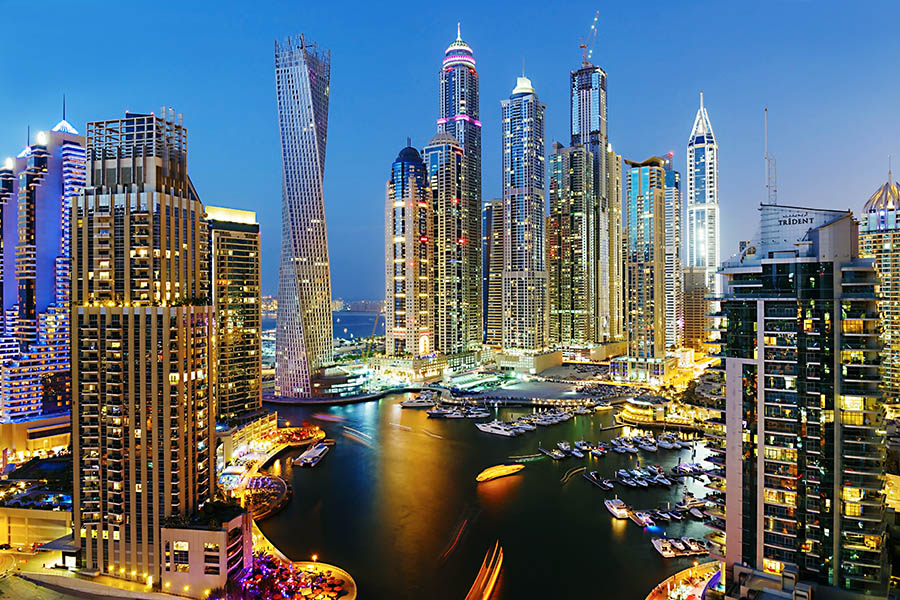
This was my first visit to Dubai and I stayed for 5 days. When I arrived it was exactly as I expected; luxury everywhere, massive buildings, with the local culture and religion taking a somewhat a back seat.
If you have a short stay planned, here are some of the things I recommend in Dubai besides enjoying the heat, the comfort of your hotel and some pool-side drinks...

View from the 164th floor of the world’s tallest building

Get some perspective. For a great view, head up the world's tallest building, the Burj Khalifa early in the morning - you don’t need to pre-book your ticket, but it's cheaper if you do. It was really impressive to see the tallest building in the world (at 808m) – even though you can only go up as far as the 164th floor. Inside the lift you can only press two buttons; Floor 1 or Floor 164 nothing in between. At the top you can use a futurist camera to have a perfect view of the city and the views are impressive. Looking down, you'll realise that the other big buildings you thought were tall are actually so much smaller than this one!
The view from the Burj Khalifa, Dubai

Taking the desert by storm on a 4WD adventure

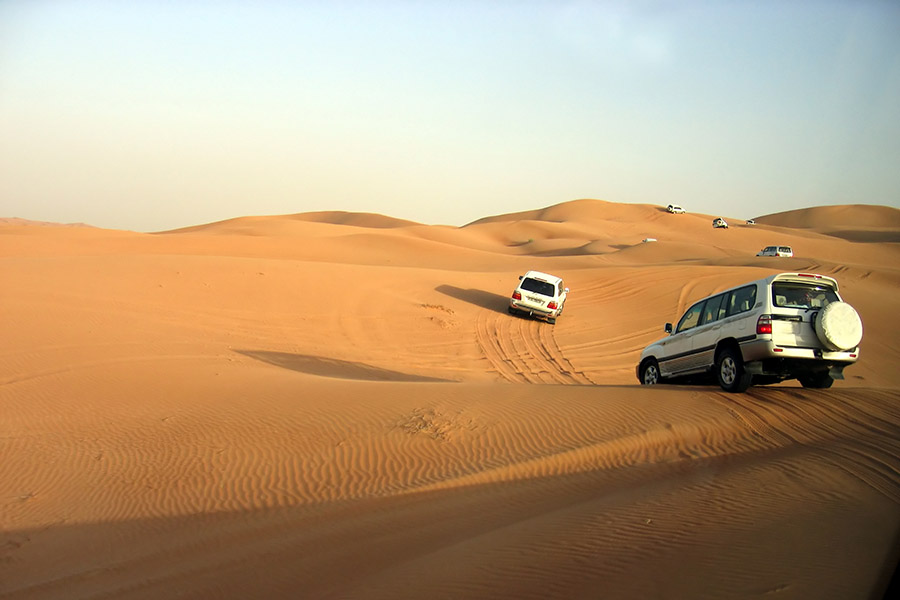
Try a trip out to the desert - like the 4 hour desert safari trip I tried. Our group was about 32 people riding 4x4 vehicles over the sand dunes which is a fun experience. We saw some wild camels and it really felt like we were in the middle of nowhere. The last part of the tour takes you to a place that’s a bit like a circus where you can get Henna tattoos, watch some dancing, visit some small shops or go to the bar. You can also try sand boarding (although the slopes are just 10 meters high!) – but it’s quite fun to try all the same!
Take a 4WD trip out into the desert

From tropical to Arctic inside the Mall of the Emirates

Hit the mall. Dubai has lots of enormous shopping malls – it’s all about the shopping - and Mall of the Emirates is probably the best memory of my trip. I used to be a snowboarder for years and to find a place like this one is just amazing – the mall has an indoors ski slope! In the middle of the slope is a bar which you can reach by taking the chairlift – it’s excellent and it looks like you are in the mountain. The temperature is -3C inside, so the contrast of knowing it’s 41C outside is incredible. They offer everything you need to feel like you are on a real mountain - all riders will enjoy a visit to the Mall of the Emirates!
Escape the heat and hit the slopes in the Mall of Emirates

Where to stay in Dubai

Stay somewhere swanky. I had the opportunity to visit quite a few hotels in this trip:
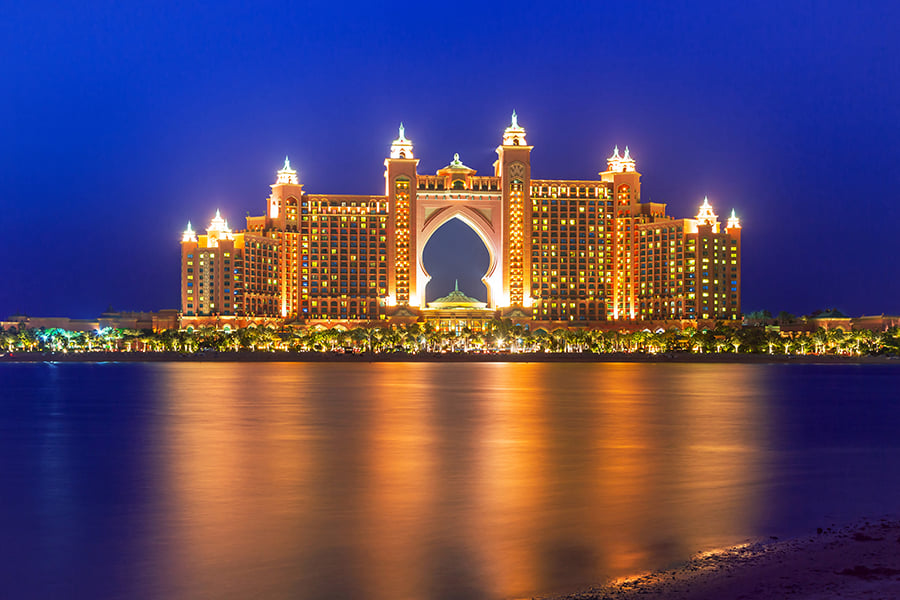
For families, I definitely recommended Atlantis, the Palm. The prices are not bad and they do a package that includes everything you need. Low season (July & August) prices start from £220 a night for 2 adults and 2 Children (under 16), but the price can hike up to £600 the night at the highest point of the season (November through to April). The bedrooms are really spacious and the resort is really amazing with a big aquarium and massive water park.
Atlantis the Palm, Dubai
For couples or Honeymooners, I would recommend the One & Only Royal Mirage. With its oriental design and dramatic architecture this hotel is a striking presence on the sea front!
For anyone visiting, I would recommend Hilton Dubai Jumeirah Residence, with a great location right on the beach but only a 5 minute walk from the metro station.
Finally I can also recommend Rose Rayhaan by Rotana, from under £100 per night this hotel is great value. Located on Sheikh Zayad Road, it has 3 restaurants and an outdoor temperature-controlled swimming pool as well as jacuzzi, steam room and sauna!
Rose Rayhaan by Rotana, Dubai

Cost of living

It’s quite hard to stay really cheaply in Dubai, so in all honesty it’s not a town for backpackers with a tiny budget. The hotels I saw on this trip were the more luxurious and expensive hotels, but they do often particularly great value for money if you visit out of season.

Cultural sensitivity

Dubai is mostly more about fashion than ‘dress code’. Out of respect for the Islamic culture, ladies need to be aware and dress sensitively (shoulders and knees covered) when outside of the resort, but inside the hotels, everyone is free to dress as they wish. You can’t drink alcohol outside of the hotel/resort (on the street) but you’ll never be outside anyway (it’s too hot!). You’re likely to spend your time indoors, and the bar is the only place you can buy alcohol. Be aware that during the Holy month of Ramadam it is illegal to be seen eating or drinking in public during daylight hours, so you will need to eat in your hotel, or after dark when the restaurants open again.
Dubai makes a great stopover!

Top recommendations for Dubai

In terms of recommendations for visitors, it depends on your expectations, but I definitely recommend staying at a hotel with swimming pool. I’d also suggest a visit to The Mall of the Emirates and the Desert Safari trip. I think you need a minimum stay of 3 days to get a good view of Dubai, and you’ll definitely need a lot of water and sun cream!
For travelling around, you can assume that it's far to hot too walk any distance within the city, so always use the taxi for long distances. The prices are really cheap because the petrol is so cheap – it’s about £5 for 15 minutes’ drive. There is also an efficient Metro system.
I think Dubai is a great place to stay, but as it can be quite pricey. If you enjoy fashion, luxury and style it’s the place you’ll need to be. The price for one beer is almost £10 so be aware of how much you spend! The people are really friendly and it certainly has a respectable, cosmopolitan feel, which you’ll enjoy!